Blog with Caraway
What Is a Jelly Roll Pan? Sizes, Uses & How It Compares to a Baking Sheet
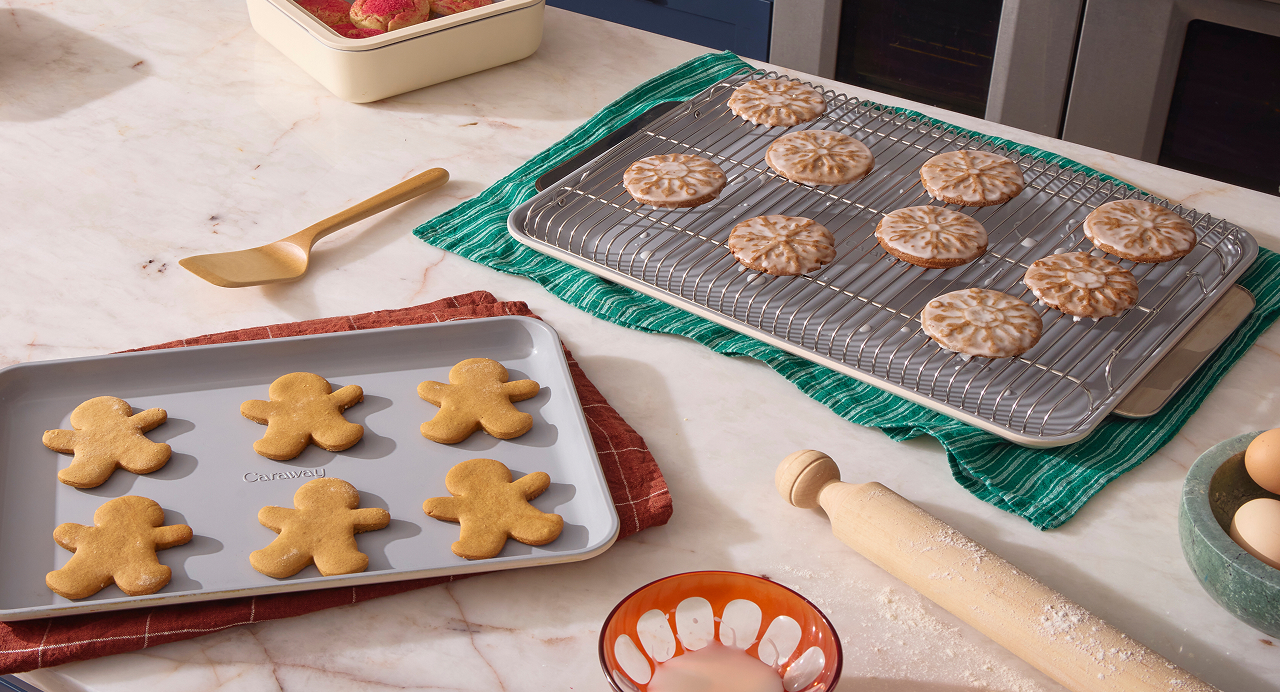
Key Takeaways:
A jelly roll pan is a shallow, rimmed sheet pan measuring roughly 10x15 inches with a one-inch lip.
It's a size, not a separate category, so you may already own one under a different name.
The dimensions matter for rolled cakes, since a larger pan spreads the batter too thin and it cracks when you roll it.
A jelly roll pan is a shallow rectangular baking pan with a rim about one inch tall, measuring roughly 10 by 15 inches.
The name comes from what it was built for: baking a thin sheet of sponge cake that gets spread with jam or cream and rolled into a spiral. Jelly rolls, Swiss rolls, pumpkin rolls, and yule logs all start life flat in one of these pans.
Here's the thing most people don't realize. A jelly roll pan isn't a distinct type of bakeware. It's the size of a rimmed baking sheet. Bakers have used the term for so long that it stuck as shorthand, even though the pan is functionally a small sheet pan.
Do You Already Own One?
Quite possibly. You're more likely to see this pan sold today as a 15x10x1-inch baking pan or a rimmed baking sheet than as a jelly roll pan.
Our Medium Baking Sheet measures 15 by 10 inches, making it a jelly roll pan. Same dimensions, different name on the label. If you own one, you're set for any recipe calling for a jelly roll pan.
This is worth knowing because it saves you from buying a redundant piece of bakeware. Once you understand that the term describes dimensions rather than a specialty item, the recipe requirement stops feeling like a barrier.
How Is a Jelly Roll Pan Different From a Baking Sheet?
Most home kitchens center on the 18x13-inch half sheet, which is the standard sheet-pan dinner size. A jelly roll pan is meaningfully smaller at 10x15, and a quarter sheet is smaller still at 13x9.
Rim height is the other variable. A jelly roll pan has a consistent one-inch lip on all four sides, which is enough to contain thin batter without blocking airflow. Cookie sheets, by contrast, are rimless or have a single raised edge for gripping, which maximizes air circulation but makes them useless for anything liquid.
For a deeper breakdown of sheet pan sizes and when to reach for each, our guide on what a baking sheet is covers that ground. And if you're specifically weighing a jelly roll pan against a cookie sheet, we've compared the two head-to-head .
What Is a Jelly Roll Pan Used For?
Rolled cakes are the origin story, but they're a small fraction of what this pan actually does.
Rolled Cakes
This is the use the pan was designed around. The dimensions produce a sponge sheet at exactly the right thickness to stay flexible: sturdy enough to hold filling, thin enough to curl without splitting.
Bar Cookies and Sheet Cakes
Brownies, blondies, lemon bars, and thin sheet cakes all work beautifully here. The one-inch rim keeps batter contained, and the smaller footprint gives you a slightly thicker bar than a half sheet would.
Everyday Roasting and Small-Batch Cooking
It's the right size for roasting vegetables for two, toasting nuts, reheating leftovers, baking a half-batch of cookies, or a sheet-pan dinner that doesn't need to feed six.
If you cook for one or two people regularly, this size often gets more use than a full half sheet.
Can You Substitute Another Pan?
For bar cookies and sheet cakes, substitution is easy. A 10x15 jelly roll pan covers about 150 square inches, which you can approximate with a 9-inch square pan plus an 8-inch square pan or a 9-inch round pan, for roughly the same total area.
For rolled cakes, be more careful. A half-sheet pan spreads the same batter across a significantly larger surface area, producing a thinner, drier sponge that's far more likely to crack when you roll it. A quarter sheet at 13x9 is the closer stand-in, giving you a slightly thicker cake that still rolls with careful handling.
The short version: if you're rolling it, size matters. If you're cutting it into squares, you have options.
What Should You Look for in a Jelly Roll Pan?
The same things that make any sheet pan good.
A heavy-gauge core. Aluminized steel conducts heat quickly and evenly, which helps brown a sponge properly rather than leaving pale patches. Thin pans also warp, and a warped pan means batter pools at one end.
Reinforced edges. A rolled rim adds rigidity and keeps the pan flat under high heat.
A coating you trust. Thin sponge batter grips hard, so release genuinely matters. Conventional non-stick relies on PTFE, part of the family of forever chemicals linked to health concerns . A mineral-based ceramic coating handles release without it.
Every pan in our Baking Sheets & Cooling Racks collection is built on an aluminized steel core with a ceramic coating free of PFAS, PTFE, PFOA, lead, and cadmium, and every piece is third-party tested.
Frequently Asked Questions
What size is a standard jelly roll pan?
Roughly 10 by 15 inches with a one-inch rim, though you'll see it listed as 10½ x 15½ depending on whether the measurement is taken inside or outside the rim. Some pans run 12x18. When a recipe says jelly roll pan without specifying, assume 10x15.
Is a jelly roll pan the same as a baking sheet?
It's a specific size of rimmed baking sheet, so it belongs to the same family. The difference is dimensions: a jelly roll pan is 10x15, while the standard half sheet is 18x13. Both have rims, and both handle the same general range of tasks.
Can I use a half-sheet pan for a jelly roll?
You can, but expect a thinner cake that's more prone to cracking when rolled. The extra surface area spreads the same batter further and dries it out faster. A quarter sheet pan is a better substitute if you don't have the right size.
Sources:
The Difference Between Baking Sheets, Cookie Sheets and Jellyroll Pans | Taste of Home
The Essential Alternative Baking Pan Sizes | King Arthur Baking