Your Cart is Empty
Get started with the Caraway essentials!
Free Shipping On Orders $90+
Free Returns
30-Day Trial
Home & Kitchen with Caraway

Key Takeaways
Ply simply refers to how many layers of metal are bonded together. Those layers directly shape how a pan heats and performs.
Three-ply cookware heats up quickly, feels lighter in the hand, and is great for everyday cooking.
Five-ply cookware offers steadier heat, stronger retention, and more control for slow cooking, searing, and precise recipes.
Stainless steel is one of those things everyone loves once they get the hang of it, but figuring out the difference between “3-ply” and “5-ply” can feel way more technical than it needs to be. And honestly, it shouldn’t.
At Caraway , we’re all about making cookware choices clearer and healthier, not more complicated. Whether you’re upgrading your kitchen, learning how to cook with cleaner materials, or trying to understand why some stainless pans feel heavier or more responsive than others, this guide breaks it all down in a way that actually makes sense.
Before comparing 3-ply and 5-ply, it helps to understand the word itself. “Ply” sounds technical, but it’s actually one of the simplest parts of stainless steel cookware.
“Ply” refers to the number of metal layers bonded together to form the body of a pan . Think of it as the pan’s internal architecture.
Why the layers matter:
Heat flow: Aluminum conducts heat quickly, whereas stainless steel conducts heat evenly. When layered, they balance each other so your pan warms up consistently.
Durability: More layers generally mean a sturdier pan that resists warping.
Responsiveness: Fewer layers heat up faster, while more layers offer smoother, more controlled temperature changes.
In other words, ply determines how your pan behaves on the stove, including how fast it heats, how evenly it cooks, and how predictable it feels in your hands.
Most quality stainless steel cookware falls into three categories: 3-ply , 5-ply , and multi-ply (anything with more than five layers). Each version sandwiches metals together so you get the strengths of all of them , not just one.
Here’s the quick breakdown:
3-Ply: Three layers total—typically stainless steel on the inside and outside with an aluminum core running through the middle.
5-Ply: Five layers total—usually stainless steel + multiple aluminum layers + stainless steel. The extra aluminum increases control and stability.
Multi-Ply (7-ply, etc.): More layers for niche performance needs, often used by professional chefs or specialty cookware brands.
3-ply stainless steel is built from three bonded layers: a stainless steel exterior, an aluminum core, and a stainless interior. This structure gives you the best of both worlds: the strength and non-reactive surface of stainless, plus the fast, even heating of aluminum. Because it’s thinner and lighter than heavier constructions, 3-ply heats quickly, cools quickly, and feels easy to maneuver.
5-ply stainless steel is built from five bonded layers: usually stainless steel on the outside with multiple aluminum layers inside. Those extra layers add stability, slow down heat fluctuations, and create a smoother, more controlled cooking surface from edge to edge. It’s a bit heavier in the hand, but in a good way: steady, substantial, and built for consistency.
3-ply heats up faster and responds quickly when you adjust the burner, making it great for weeknights and cooks who move fast. 5-ply takes a touch longer to warm, but once it does, it holds onto heat longer and distributes it more evenly.
In terms of weight, 3-ply is noticeably lighter and easier to lift, while 5-ply feels sturdier and more anchored on the stovetop. Both are durable, but the thicker build of 5-ply often resists warping better over time.
Price-wise, 5-ply generally costs more because of the added layers and performance benefits, while 3-ply stays more budget-friendly without sacrificing everyday reliability.
Choosing between 3-ply and 5-ply really comes down to how you cook, not which one is “better.”
If your kitchen vibe is quick weeknight meals, spontaneous sautés, or anything that happens in under 20 minutes, 3-ply often feels like the better fit. It heats up fast, feels lighter in your hand, and tends to be more budget-friendly.
On the other hand, 5-ply shines if you cook often and love recipes that reward patience. The extra layers give you more control over heat, meaning smoother searing, steadier simmering , and fewer hot spots.
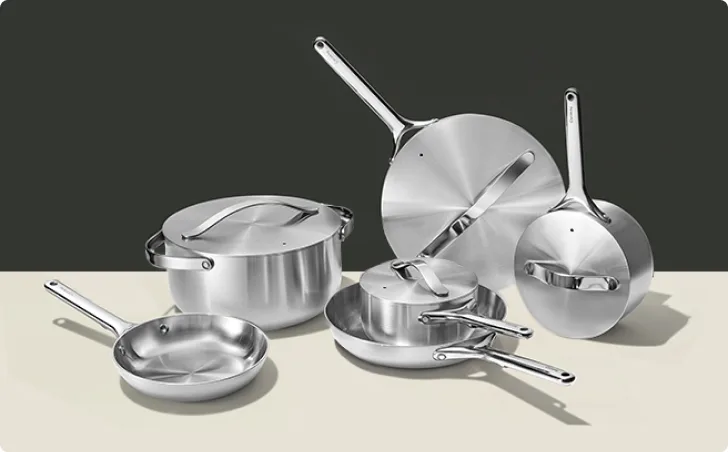
And when it comes to Caraway, our stainless steel collection lands right in the sweet spot. It’s built for balanced performance: sturdy enough to feel substantial but designed so it never feels overly heavy.
Every piece is made with clean, high-quality materials that support healthy cooking while still giving you the responsiveness and reliability stainless steel is known for.
At the end of the day, the right ply is the one that fits your lifestyle, not just your heat preferences.
Your stove also plays a role. Induction benefits from cookware with smooth, consistent heat distribution, while gas and electric are more forgiving, so your current setup can subtly influence how each ply performs.
And don’t forget comfort. If lifting a heavy pan doesn’t feel great on your wrist or shoulders, no amount of “premium performance” will make it worth it. The best cookware is the cookware you actually enjoy using, and that’s exactly why Caraway designs each piece to feel balanced, intuitive, and genuinely comfortable in real everyday cooking.
Both work beautifully! It just depends on your pace. 3-ply heats up fast and feels lighter in your hand, which is great for quick, everyday meals. 5-ply gives you more control and steadier heat, which helps with searing, slow cooking, and recipes that need precision.
If you cook often, love consistency, or prefer a more substantial pan, 5-ply can absolutely be worth it. The added layers improve heat retention, stability, and long-term durability, which is why many home cooks consider it an investment piece.
Stainless steel contains zero PFAS and has no chemical coatings, which is why many people choose it as a clean, long-lasting option. It’s naturally non-reactive, durable, and built for high heat.
Sources:
What is the difference between 3-ply (tri-ply) and 5-ply and 7-ply? | Century Life
How Not to Ruin Your Nonstick Pan | Consumer Reports
Get started with the Caraway essentials!
Free Shipping On Orders $90+
Free Returns
30-Day Trial