Your Cart is Empty
Get started with the Caraway essentials!
Free Shipping On Orders $90+
Free Returns
30-Day Trial
Home & Kitchen with Caraway

Key Takeaways:
The biggest thing you can do to reduce food waste is plan meals around what you already have before buying anything new.
Prepping ingredients (not full meals) gives you flexibility to use things up creatively throughout the week.
Smart storage keeps produce and leftovers fresh longer, which means less food in the trash and more on your plate.
Here's a stat that's hard to ignore: roughly 38% of all food in the U.S. goes to waste , and most of it happens right at home. It adds up fast, both for your wallet and the planet.
At Caraway , we believe a healthier kitchen goes beyond what's in your cookware. It's also about how you use what's in your fridge. Zero-waste meal planning sounds intense, but it really comes down to being a little more intentional about how you buy, cook, and store food.
Here are 10 ideas that actually work in real life.
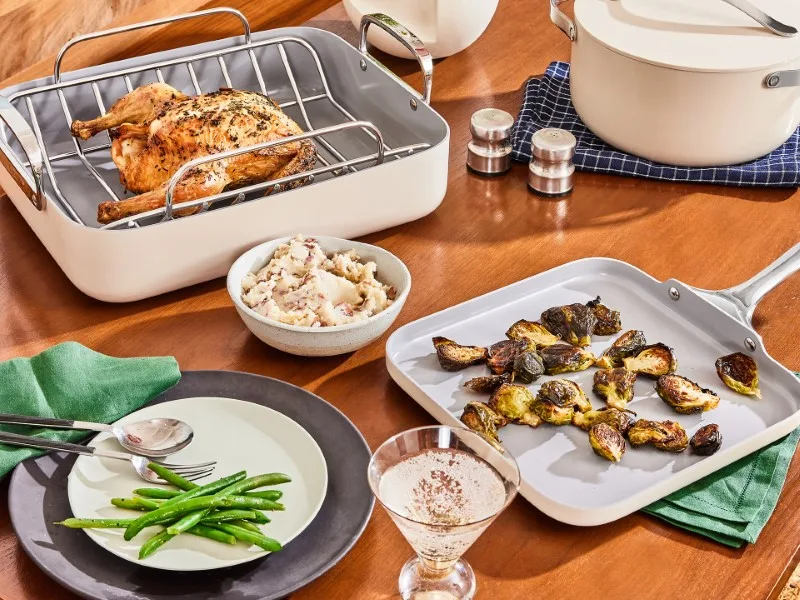
Before you make a list or open a delivery app, do a quick scan of your fridge, freezer, and pantry. What's about to expire? What did you buy last week and forget about?
Those half-used ingredients are your starting point, not an afterthought. Building your meal plan around what you already have is the single most effective way to cut down on household food waste .
Instead of planning seven completely different dinners with seven different grocery lists, pick a handful of overlapping ingredients and build your meals from there.
If you're buying cilantro for tacos on Monday, plan a rice bowl or a soup later in the week that uses the rest of the bunch. This keeps your grocery list shorter and makes sure nothing wilts in the back of the crisper drawer.
This one sounds simple because it is. Assigning loose themes to your nights (think: pasta Monday, sheet-pan dinner Wednesday, stir-fry Friday) gives you a creative framework without locking you into exact recipes. It also makes it easier to reuse ingredients across meals since you're working within a flavor family all week.
Bonus: it takes the "what's for dinner" dread off the table.
You don't have to spend an entire Sunday portioning out five days of lunch into identical containers. That level of meal prep works for some people, but for most of us, it leads to meal fatigue by Wednesday.
Instead, prep your building blocks. Wash and chop your vegetables. Cook a big batch of grains. Marinate your protein. Then mix and match throughout the week however you feel like it.
A good set of cutting boards makes this part way faster, especially when you can use different sizes for different tasks and keep everything organized on the counter.
Once a week, plan a meal that's specifically designed to use up whatever's left in the fridge. Frittatas, fried rice, stir fries, quesadillas, and grain bowls are all perfect for this. That random quarter onion, the last handful of spinach, the two leftover chicken thighs.
Toss them all in and call it dinner. It's one of the easiest ways to prevent odds and ends from going to waste , and honestly, some of the best meals happen this way.
A huge amount of food waste happens because people forget what they have. Opaque containers, overstuffed drawers, and mystery leftovers shoved to the back of the fridge are all recipes for waste. Switch to clear, visible storage so you can see exactly what needs to be used up.
Our Food Storage Set is made with ceramic-coated borosilicate glass and glass lids, so you always know what's inside without opening anything. The Air Release Technology keeps food fresh and odors locked out, which means your leftovers actually last long enough to get eaten.
Your freezer is the ultimate food waste safety net. Overripe bananas? Freeze them for smoothies. Bread going stale? Slice and freeze for toast. Leftover soup or sauce? Pour into containers and stash for a busy weeknight.
The key is to freeze things before they go bad , not after. Get in the habit of checking your fridge mid-week and moving anything you're not going to use in time straight to the freezer.
We peel, trim, and discard way more than we need to. Carrot tops make great pesto. Broccoli stems are perfectly edible when sliced thin and sautéed. Potato skins don't need to come off for most recipes. Even onion skins and herb stems can go into a bag in the freezer for homemade vegetable stock later.
Once you start looking at your scraps differently, you'll be surprised how much usable food you've been throwing away.
Doubling a recipe takes barely any extra effort but gives you meals for days. A big pot of chili on Sunday becomes lunch on Monday and a baked potato topping on Wednesday. A roasted chicken turns into sandwiches, then soup by the end of the week.
This approach cuts down on cooking time, grocery trips, and the odds of food going unused. Just make sure your storage containers seal properly so those leftovers taste just as good on day three.
Even with the best planning, some food waste is inevitable. Eggshells, coffee grounds, avocado pits, fruit peels. Instead of sending them to the landfill (where food waste generates methane as it breaks down), set up a simple composting system.
Countertop compost bins make it easy to collect scraps throughout the week, and plenty of cities now offer curbside pickup if you don't have yard space for a full bin.
Nope. Even planning three or four dinners a week and leaving the rest flexible makes a significant difference. The goal is to reduce impulse buying and make sure the food you bring home gets used.
Glass containers with sealed lids are the best option for freshness, safety, and versatility. They won't stain, absorb odors, or leach chemicals, and they go from fridge to oven to table without needing to transfer food.
Estimates vary, but the average American household throws away $1,350 to $2,275 in food per year . Even cutting that number in half through better planning and storage adds up to real savings.
Sources:
Create Meals, Not Waste: Planning Ahead to Reduce Food Waste | Hennepin County
Food Waste Prevention Part 2: Meal Planning | Utah State University Extension
Zero Waste Cooking: 17 Ways to Reduce Food Waste | FoodPrint
No-Waste Strategies | Food Waste Feast
Zero Waste Meal Planning in 7 Easy Steps | Milk Glass Home
Get started with the Caraway essentials!
Free Shipping On Orders $90+
Free Returns
30-Day Trial