Almost there! You're $90.00 away from free shipping
Your Cart is Empty
Get started with the Caraway essentials!
Free Shipping On Orders $90+
Free Returns
30-Day Trial
Home & Kitchen with Caraway

Key Takeaways
High-quality ceramic cookware can last anywhere from 3 to 5+ years with proper care, though cheaper versions may lose their nonstick performance in under a year.
The biggest factors that shorten a ceramic pan's life are excessive heat, metal utensils, abrasive cleaning, and thermal shock.
Construction quality matters more than most people realize. A well-built pan with even heat distribution puts less stress on the coating and holds up significantly longer.
How long is ceramic cookware actually supposed to last? The honest answer is: it depends. A cheap ceramic pan from a discount store might start losing its nonstick surface in a few months. A well-constructed ceramic pan with proper care can last three to five years or longer, and the pan itself (minus the coating's peak nonstick performance) can keep cooking for years beyond that.
At Caraway , we designed our cookware to land on the longer end of that spectrum. But no matter which brand you use, understanding what affects ceramic's lifespan gives you the power to get the most out of every pan you own.
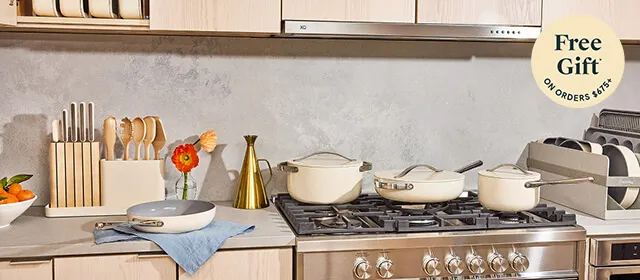
Before we talk about longevity, it helps to understand what ceramic cookware actually is. When most people say "ceramic pan," they're referring to a metal pan (usually aluminum) coated with a mineral-based nonstick coating derived from natural materials like silicon and oxygen. It's not ceramic all the way through. The ceramic is the coating , and the metal core underneath handles the heat conduction.
This is what makes ceramic cookware appealing in the first place. The coating creates a naturally slick surface that lets you cook with less oil, releases food easily, and cleans up in seconds. And unlike traditional nonstick coatings made with PTFE (Teflon), ceramic is free of PFAS, PFOA, and forever chemicals. You get nonstick performance without the chemical concerns.
The trade-off is that ceramic coatings are softer than the metal underneath them. They can scratch, wear, and degrade over time, especially if they're exposed to conditions they weren't built for. That's not a flaw. It's just the nature of the material, and knowing how to work with it is the difference between a pan that lasts a year and one that lasts five.
Not all ceramic cookware ages the same way. Some people get years of excellent performance, while others feel like their pan gave up after six months. The gap almost always comes down to a handful of factors.
This is the biggest one, and it starts before you ever turn on a burner. Pans built with multiple layers of quality materials, a thick aluminum core, and a well-applied ceramic coating will hold up dramatically better than thin, single-layer alternatives. Cheap pans warp more easily, distribute heat unevenly, and put more stress on the coating with every use.
Our ceramic cookware is built on a recycled aluminum core with a stainless steel base plate. That combination gives you fast, even heat distribution so the coating doesn't take the brunt of hot spots or uneven temperatures. It's also why our pans are oven safe up to 550°F and compatible with every stovetop, including induction.
This is the most common mistake people make with ceramic cookware, and it's the fastest way to shorten its life. Ceramic holds heat more efficiently than most people expect.
Cooking on medium heat with a ceramic pan delivers the same results that high heat would on a traditional pan. Cranking the burner to max doesn't cook your food faster. It just accelerates wear on the coating.
High heat causes the ceramic to expand and contract more aggressively, which can create micro-cracks in the surface that reduce nonstick performance. Keep things at low to medium and let the pan do the work. You'll notice your food actually cooks more evenly this way, too.
Metal utensils are one of the most common culprits behind premature coating wear. A stainless steel spatula dragged across a ceramic surface leaves microscratches that build up over time, eventually creating enough texture for food to grip rather than glide.
Wooden, silicone, and nylon tools are all safe choices that won't damage the surface. Our Prepware collection is made from FSC-certified birch wood, which is naturally durable and gentle on ceramic coatings.
How you wash your pans matters just as much as how you cook with them. Dishwashers expose ceramic coatings to harsh detergents and intense water pressure that degrade the surface over time. Steel wool and abrasive scrubbers do the same thing.
The good news is that ceramic pans barely need any of that. A soft sponge, warm water, and a little dish soap are all it takes. The nonstick surface means food comes right off without a fight.
This is the silent killer of ceramic cookware. Thermal shock occurs when a pan undergoes a rapid temperature change, such as running cold water over a hot pan or placing a cold pan on a screaming-hot burner.
That sudden shift forces the materials to expand or contract unevenly, which can crack the coating or warp the base. Always let your pan cool down naturally before washing, and bring it to room temperature gradually before cooking.
It sounds minor, but how you store your pans affects how long the coating stays intact. Stacking pans directly on top of each other creates surface-to-surface friction that scratches the coating every time you pull one out.
Our cookware comes with a magnetic pan rack and canvas lid holder specifically designed to keep pans separated and organized. If you don't have a dedicated storage system, placing a dish towel or soft liner between stacked pans does the trick.
If you take one thing away from this article, let it be this list. These habits are simple, and they genuinely extend the life of your pans.
Cook on low to medium heat. Ceramic holds heat efficiently, so you rarely need more than medium. Let the pan preheat for 60 to 90 seconds before adding oil.
Use a small amount of oil or butter every time. Even though the surface is nonstick, a thin layer of fat acts as a buffer between food and coating. One to two tablespoons is plenty.
Skip the cooking spray. Aerosol sprays leave a residue that builds up over time and creates a sticky film that's hard to remove without scrubbing.
Hand wash with a soft sponge. Warm, soapy water and a non-abrasive sponge after every use. That's it.
Let the pan cool before washing. Never run cold water over a hot ceramic pan. Give it time to come down to room temperature first.
Use wooden, silicone, or nylon utensils. Keep metal tools away from the cooking surface entirely.
Store pans properly. Use a rack, organizer, or soft liners between stacked pans to prevent scratching.
Ceramic cookware lives in a different category than materials built to last for decades. Stainless steel and cast iron can last a lifetime, but neither offers a nonstick surface out of the box. Enameled cast iron is incredibly durable (our Enameled Cast Iron Collection comes with a lifetime warranty), but it's heavier, slower to heat, and not truly nonstick the way ceramic is.
Ceramic cookware fills a specific role: lightweight, genuinely nonstick, non-toxic everyday cooking. It's what you reach for on a Tuesday night when you want to make dinner, eat dinner, and clean up dinner without thinking too hard about any of it. The lifespan is shorter than cast iron, yes, but the daily cooking experience is hard to match.
Yes, gradually. The nonstick performance of any ceramic coating will diminish with regular use. How fast that happens depends on heat levels, utensil choice, and cleaning habits. With proper care, high-quality ceramic pans maintain strong nonstick performance for years.
Some people have luck re-seasoning ceramic pans by rubbing a thin layer of cooking oil onto the surface and heating it gently. This can temporarily improve release, but it won't fully restore a coating that's been significantly worn down.
Yes. Unlike traditional nonstick coatings made with PTFE, ceramic coatings are made from inorganic, mineral-based materials that don't release harmful chemicals when scratched. The pan just won't be as nonstick as it once was.
Sources:
Polytetrafluoroethylene (PTFE, Aka Teflon®) | Safe Cosmetics
What Temperature Can Ceramic Plates Withstand? From Daily Use To Extreme Tests | Solecasa
Almost there! You're $90.00 away from free shipping
Get started with the Caraway essentials!
Free Shipping On Orders $90+
Free Returns
30-Day Trial