Almost there! You're $90.00 away from free shipping
Your Cart is Empty
Get started with the Caraway essentials!
Free Shipping On Orders $90+
Free Returns
30-Day Trial
Home & Kitchen with Caraway
Key Takeaways
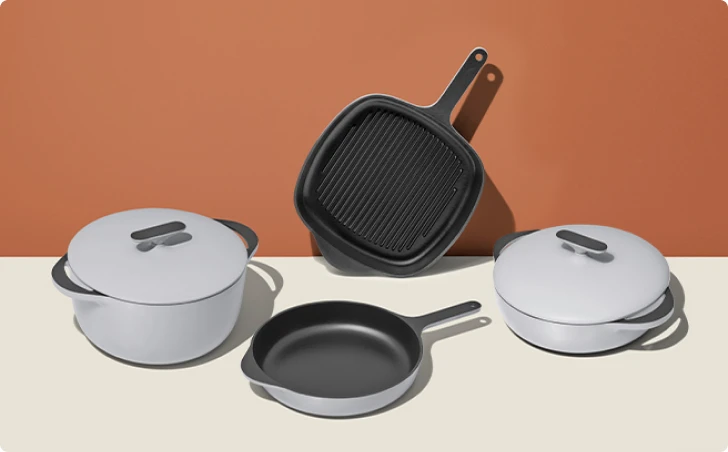
Enamel cookware is made by fusing glass particles onto cast iron or steel, creating a durable, non-reactive surface built for slow cooking, braising, and high-heat searing.
Ceramic-coated cookware pairs a mineral-based nonstick coating with an aluminum core, making it lightweight, quick to heat, and ideal for everyday cooking.
Both are non-toxic and free of PFAS, PTFE, and PFOA, but they shine in different situations, and many home cooks benefit from having both in their kitchen.
If you've been shopping for non-toxic cookware, you've probably noticed two terms come up: enamel and ceramic. Both get praised as safer alternatives to traditional nonstick, and both are free of the forever chemicals that made people rethink their kitchens in the first place. But they're not the same thing, and they don't cook the same way either.
At Caraway , we make both. Our Ceramic Cookware has been our signature since day one, and our Enameled Cast Iron Collection launched to fill a different role in the kitchen entirely. Understanding what each material does well (and where it falls short) will help you pick the right tool for how you actually cook.
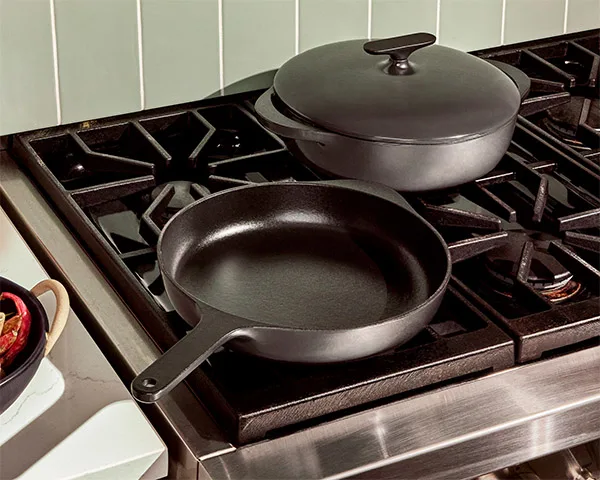
Enameled cookware is made by fusing powdered glass particles onto a cast iron or steel base at extremely high temperatures. That glass layer creates a smooth, glossy surface that's non-reactive, meaning it won't interact with acidic ingredients like tomatoes, wine, or citrus. Unlike bare cast iron, it doesn't need seasoning, and it won't rust.
The cast iron body underneath is where the real cooking power lies. It holds heat exceptionally well and distributes it evenly, which makes it perfect for low-and-slow cooking methods like braising, stewing, and roasting. Once an enameled Dutch oven is up to temperature, it stays there, keeping your braise at a steady simmer without constant adjustments.
The trade-offs? Enameled cast iron is heavy. A 6.5-quart Dutch oven isn't something you're flipping with one hand.
It also takes longer to preheat than lighter materials, and it's susceptible to chipping or cracking if dropped or exposed to sudden temperature swings. And while the enamel surface is naturally slick, it's not truly nonstick. You'll still want to use oil or butter, especially when searing.
When most people say "ceramic cookware," they're talking about ceramic-coated cookware : an aluminum (or sometimes stainless steel) base coated with a mineral-based nonstick surface derived from natural materials like silicon and oxygen.
Ceramic-coated pans heat up fast, cook evenly thanks to the aluminum base, and offer a slick surface that lets you cook with less oil. Anything that tends to stick in other pans glides right off a good ceramic surface with minimal effort. They're also significantly lighter than enameled cast iron, which makes them easier to handle and store.
The limitation is that ceramic coatings are more delicate than enamel. High heat can degrade performance over time, and metal utensils can leave scratches. With proper care (low-to-medium heat, wooden or silicone utensils, and hand washing), a quality ceramic pan will stay in great shape for years.
This is where both materials really shine. Neither enamel nor ceramic contains PFAS, PTFE, PFOA, or other forever chemicals . Both are considered safe for food contact as long as the coating is intact and the cookware is free of heavy metals like lead and cadmium.
That said, not all brands test their products the same way. Quality varies, especially with ceramic coatings, where cheaper versions may use questionable materials in the layers beneath the surface.
Look for cookware that's third-party tested and transparent about what's in the product. Our ceramic cookware and enameled cast iron are both tested for over 200 types of PFAS and 20+ heavy metals, and we'll send the reports to anyone who asks.
The simplest way to think about it: ceramic is your everyday workhorse, and enameled cast iron is your weekend anchor.
Reach for ceramic when you're making:
Eggs, pancakes, or anything that sticks easily
Quick sautés and stir-fries
Weeknight dinners where speed and easy cleanup matter
Light sauces, reheating, or anything on low-to-medium heat
Reach for enameled cast iron when you're making:
Braises, stews, and soups that simmer for hours
Bread (a Dutch oven is unbeatable for crusty loaves)
Roasts or large cuts of meat that need a hard sear followed by a long, slow cook
Acidic dishes like tomato sauces, chili, or wine-braised proteins
Our Enameled Cast Iron Dutch Oven is built for exactly these kinds of meals. The triple-layer enamel coating is scratch-resistant and naturally slick, so cleanup is simple even after a long braise. It's oven safe to 500°F, works on every stovetop, and comes with a lifetime warranty because it's genuinely built to last for generations.
The Braiser fills the sweet spot between a skillet and a Dutch oven, with a wide base for searing and high sides for reducing liquids.
It has a smooth, naturally slick surface, but it's not truly nonstick the way ceramic is. You'll still need oil or butter when cooking, especially for searing or frying. The enamel prevents food from bonding to the surface, but delicate items like eggs cook better on ceramic.
It's not recommended. While the enamel coating is more durable than ceramic, metal utensils with rough edges can still chip or scratch the surface over time. Wooden, silicone, or nylon tools are the safer choice for both materials.
Enameled cast iron has the edge on longevity. With proper care, it can last for decades, which is why our enameled pieces come with a lifetime warranty. Ceramic-coated cookware is durable, but the nonstick coating will gradually wear with use, so it benefits from more careful handling.
Sources:
Ceramic vs. Enameled Cookware: What's the Difference? | Prudent Reviews
Enamel vs Ceramic Cookware: What Should I Buy? | Kitchen Any
Ceramic vs. Enameled Cast Iron: Key Differences Explained | The Skillful Cook
Why is Third-Party Certification Important for Dietary Supplements? | OPSS
Almost there! You're $90.00 away from free shipping
Get started with the Caraway essentials!
Free Shipping On Orders $90+
Free Returns
30-Day Trial