Spend $675 to unlock your gift!
$0
$90
Free Shipping
$675
Baking Sheet Duo
($120 Value)
Your Cart is Empty
Get started with the Caraway essentials!
Free Shipping On Orders $90+
Free Returns
30-Day Trial
Home & Kitchen with Caraway

| Yes, ceramic cookware is safe. Ceramic cookware is generally considered a clean option when it is food-contact compliant, tested for heavy metals like lead and cadmium, and used within recommended heat ranges. Most modern ceramic cookware refers to metal cookware with a ceramic-based coating designed to create an easy-release cooking surface. Understanding the type of ceramic cookware, how it’s tested, and how it’s used matters more than the label alone. |
Key Takeaways
“Ceramic cookware” can mean fully ceramic or ceramic-coated cookware, and the distinction matters for safety and performance.
Verified testing for lead and cadmium is an important factor when evaluating ceramic products.
Many ceramic coatings are made without PFAS, PTFE, or PFOA, but material transparency varies by brand.
Ceramic cookware should be replaced if the surface chips, peels, or shows exposed base material.
If you’re wondering if ceramic cookware is safe, the resounding answer is yes.
If you’ve been scrolling through websites looking for new cookware, you may have seen words like “PFOA-free” or “PFA-free” used to describe some of them. These words are often used in reference to ceramic cookware, as they are deemed to be a wonderful type of non-toxic cookware .
But wait—does that mean that there is such a thing as toxic cookware? Absolutely.
Read on to learn more about the safety of ceramic cookware and why you should switch to non-toxic cookware.
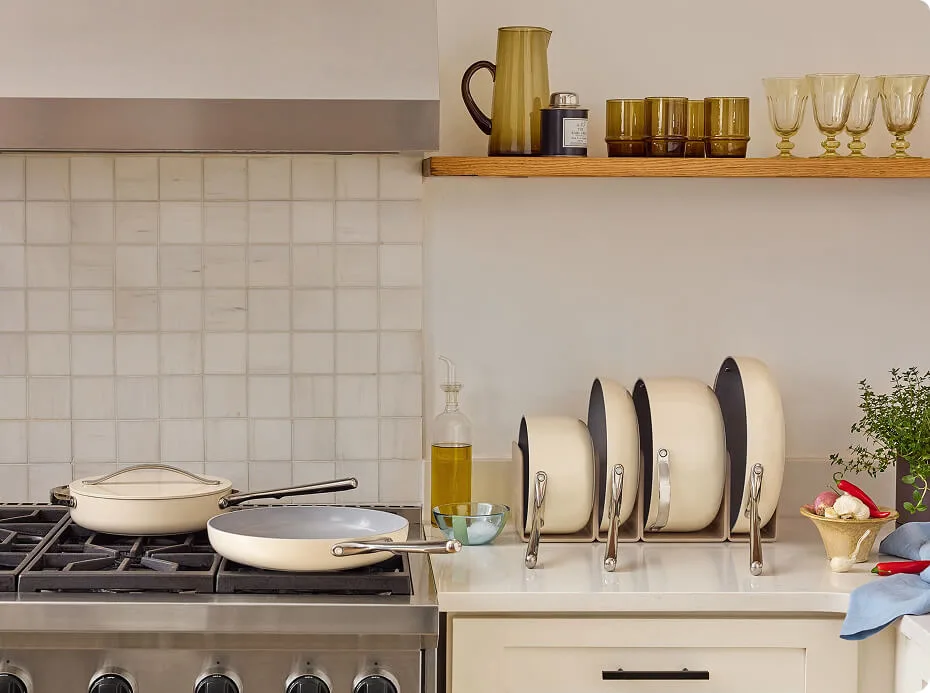
Ceramic cookware typically refers to metal cookware finished with a ceramic-based coating that creates an easy-release cooking surface. This coating is applied to materials like aluminum or stainless steel, which provide structure and heat performance, while the ceramic layer supports everyday cooking and cleanup.
However, the term “ceramic cookware” is used in two different ways. Some products are fully ceramic, meaning the entire piece is made from clay that is kiln-fired and finished with a glaze. Others are ceramic-coated cookware, which uses a metal base with a ceramic nonstick coating applied to the cooking surface.
This distinction matters when evaluating safety and performance. Fully ceramic pieces depend heavily on the glaze, which can vary by manufacturer and may raise questions about heavy-metal testing if the source is unclear. Ceramic-coated cookware focuses more on coating durability, heat use, and how the surface wears over time.
In practice, most modern cookware marketed as ceramic is ceramic-coated. Understanding which type you’re using helps set realistic expectations around longevity, heat guidance, and the factors that influence safety.
Many types of cookware achieve easy-release performance using different materials and surface technologies. One of the most widely recognized is PTFE, which is a synthetic polymer commonly used to create traditional nonstick coatings.
It’s helpful to understand the terminology often used in discussions about cookware materials. PFAS refers to a large group of chemicals used in various industrial and consumer products . PTFE is one material within that broader category, while PFOA is a separate chemical that was historically used in some manufacturing and has since been phased out in many regions.
For most modern PTFE cookware, everyday use is considered low risk when products are used as directed. The primary safety consideration tends to be overheating. At very high temperatures, PTFE coatings can break down and release fumes that may cause short-term flu-like symptoms sometimes referred to as polymer fume fever.
This is why manufacturers commonly recommend avoiding prolonged empty preheating and replacing cookware when coatings become significantly damaged.
Surface wear is another practical factor across all nonstick technologies. Deep scratches, peeling, or exposed base material can affect performance and signal that a pan should be replaced. Understanding how different coatings behave over time helps set realistic expectations and supports safer long-term use.
For many shoppers, ceramic coatings are explored as an alternative surface technology. Comparing materials in terms of testing transparency, heat guidance, and replacement indicators can be more useful than focusing on a single label alone.
When people ask whether ceramic cookware is safe, the most common concern relates to lead and cadmium. These are heavy metals that can be used in certain pigments or glazes, particularly in decorative ceramics or products without clear testing standards.
It’s important to understand that not all ceramic cookware contains lead or cadmium. The potential concern is tied to unverified glazes, older products, decorative pottery, or ceramics that show visible damage such as cracks or surface crazing. In those cases, there is a possibility that metals could migrate into food, especially when acidic ingredients are involved or when food remains in contact with the surface for long periods.
Modern cookware designed for food contact is typically tested against regulatory standards that limit heavy metal migration. This testing is one of the most meaningful indicators consumers can look for when evaluating ceramic products, as material labels alone don’t always provide the full picture.
Certain situations can increase uncertainty, including very old ceramic cookware, imported decorative pieces not intended for cooking, and products that show signs of surface damage. Visible cracking, glaze wear, or chips can affect both performance and confidence in the cooking surface, which is why replacement guidance is often part of safe-use recommendations.
How to reduce potential risk:
Choose cookware from brands that clearly state food-contact compliance
Look for third-party testing related to heavy metals like lead and cadmium
Avoid using decorative pottery for cooking unless it is verified for food use
Limit storing acidic foods in ceramics with unknown testing history
Replace cookware that shows cracks, chips, or surface crazing
Not all ceramic cookware presents the same considerations. The key factor is verification. Products backed by transparent testing, clear material information, and usage guidance allow consumers to make more confident decisions about everyday cooking.
Many cookware brands now emphasize testing transparency as part of product development, including disclosure around heavy metal standards and material verification, which can help support informed comparisons without relying on broad claims.
At Caraway, our ceramic coating is made without PTFE, PFOA, PFAS, lead, cadmium, and nickel. Every piece is third-party tested for over 200 types of PFAS and 20+ heavy metals, with full reports available upon request.
We believe that testing transparency is one of the most meaningful indicators of quality, which is why we publish our results rather than asking you to take our word for it. Verified testing is the difference between marketing claims and actual proof.
Heat guidance is one of the most important factors when using ceramic cookware. There is an important distinction between what is considered safe and what supports the longest lifespan of the cooking surface.
Ceramic cookware is generally designed to tolerate typical stovetop and oven temperatures when used as directed. However, very high heat, especially prolonged empty preheating, can accelerate surface wear over time. This affects performance first, not safety, which is why many manufacturers recommend low to medium heat for everyday cooking.
Ceramic coatings tend to retain heat efficiently, meaning high heat is often unnecessary for most recipes. Using moderate temperatures can support more consistent cooking results while helping maintain the integrity of the coating. If cookware begins to smoke before oil is added, that is usually a sign the pan is too hot and should be allowed to cool before continuing.
Oil choice also plays a role. Selecting oils appropriate for the temperature you’re cooking at can help reduce residue buildup and support easier cleanup over time. These small usage habits can significantly extend the performance of ceramic surfaces.
In practice, the goal isn’t to avoid heat altogether but to use it intentionally. Following manufacturer guidance, avoiding prolonged empty heating, and monitoring visible signs like smoke or sticking can help maintain both performance and confidence in everyday use.
Ceramic cookware is often explored as an alternative surface technology because many ceramic coatings are designed without PFAS, PTFE, or PFOA . When paired with verified testing and appropriate use, it can function as a reliable option for everyday cooking.
Like any cookware material, safety depends less on the label and more on verification and use. Checking for testing transparency related to heavy metals, following heat guidance, and monitoring surface condition over time are practical factors that influence long-term confidence.
In everyday use, ceramic cookware performs best when treated as a maintained surface rather
than a permanent one. Using moderate heat, avoiding abrasive cleaning, and replacing cookware if the coating chips, peels, or exposes the base material helps support both performance and intended use.
For most home cooks, the decision framework is straightforward: verify testing, use cookware as directed, and replace pieces that show significant wear. When those steps are followed, ceramic cookware can be a reliable option for daily cooking.
All cookware surfaces experience wear over time, including ceramic coatings. Minor cosmetic marks are common with regular use and typically affect performance before they raise broader concerns. Light surface scratches may lead to increased sticking, but don’t automatically mean cookware needs to be replaced.
Replacement becomes more relevant when structural wear is visible. Chipping, peeling, flaking, or areas where the underlying base material is exposed can signal that the cooking surface is no longer performing as intended.
Deep gouges, persistent sticking that doesn’t improve with cleaning, or a coating that appears rough or bubbled are also indicators that it may be time to transition to a new piece.
Warping can affect heat distribution and cooking consistency, which is another practical reason replacement may be considered. Monitoring surface condition as part of normal kitchen maintenance helps ensure cookware continues to perform predictably over time.
In general, cosmetic wear affects convenience, while coating damage is the clearer signal for replacement.
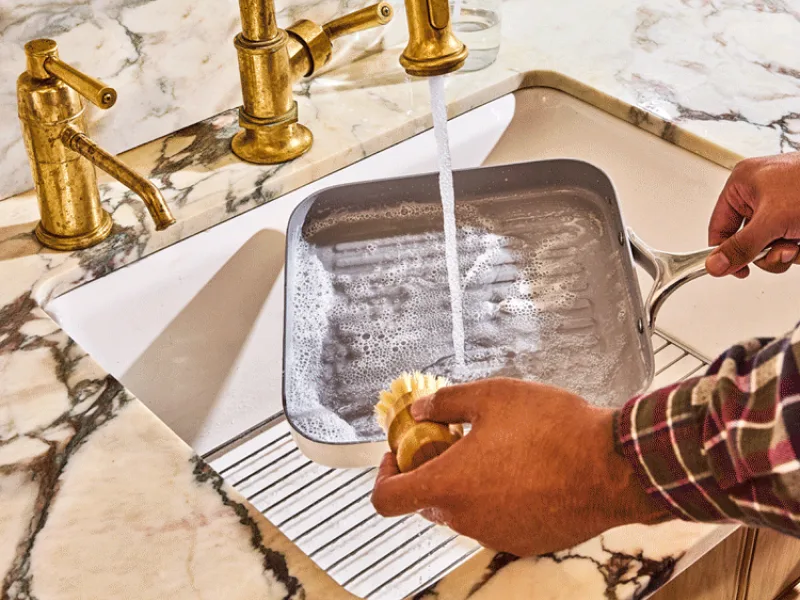
Daily care plays an important role in how ceramic cookware performs over time. While ceramic coatings are designed for regular use, simple habits can help maintain surface performance and support more consistent cooking results.
Allow cookware to cool before washing, then use warm water, mild soap, and a non-abrasive sponge to remove residue. Avoid steel wool, harsh scouring pads, or highly abrasive cleaners, as these can accelerate surface wear.
Utensil choice affects surface longevity. Silicone, nylon, or wooden utensils help reduce unnecessary scratching during normal cooking. Cutting directly inside the pan or using sharp metal tools can shorten the lifespan of the coating.
Storage is often overlooked but can influence wear over time. Stacking cookware without protection can create surface friction that contributes to chipping or cosmetic wear. Using pan separators, soft liners, or dedicated storage systems can help prevent contact between pieces.
Heat habits are one of the most impactful factors. Preheating on low to medium heat, avoiding prolonged empty heating, and monitoring smoke levels can help maintain coating performance.
With consistent care and thoughtful use, ceramic cookware can remain a reliable part of everyday cooking routines.
At Caraway , we believe in healthy cookware and healthy communication. Contact us at any time for advice on which color Cookware Set is right for your kitchen or to get the full reports on the chemical makeup of our cookware.
Ceramic cookware isn’t just a kitchen essential; it’s part of healthy living, clean eating, and an intentional center to your home.
Ceramic cookware is generally considered safe when it is food-contact compliant, tested for heavy metals, and used within recommended heat ranges. Verification and proper use matter more than labeling alone.
Not all ceramic cookware contains lead or cadmium. The concern relates to certain glazes, decorative ceramics, older products, or cookware without clear testing transparency.
Ceramic cookware is often explored as an alternative surface technology because many ceramic coatings are developed without certain fluorinated nonstick materials. Safety across all cookware types depends on testing, proper heat use, and replacing damaged pieces.
Minor cosmetic scratches may affect performance, but chipping, peeling, or exposed base material are common indicators that cookware should be replaced.
Ceramic cookware can tolerate normal cooking temperatures, but prolonged high heat may shorten coating lifespan. Many manufacturers recommend low to medium heat for everyday use.
Lifespan varies based on usage, heat habits, cleaning methods, and storage. With proper care, ceramic cookware can remain functional for years, though coatings are not permanent.
Fully ceramic cookware is made from clay and glaze, while ceramic-coated cookware uses a metal base with a ceramic coating. The distinction affects durability, heat behavior, and safety considerations.
Minor scratches affect performance more than safety, but visible chips, peeling, or exposed base material are signals to replace the pan. Quality ceramic coatings don't release harmful substances when worn, though the cooking surface stops performing as intended once compromised.
Ceramic cookware remains functional as long as the coating is intact. Most well-made pans hold up for several years with proper care. Replace when you notice chipping, deep scratches, or persistent sticking that doesn't improve with cleaning.
Ceramic coatings are made without PTFE, the synthetic polymer behind traditional Teflon-style nonstick. That means no concerns about polymer fume fever from overheating. For a full breakdown of how the two compare, see our
Ceramic vs Nonstick guide .
Sources:
Ceramic-coated cookware: Investigating the accuracy of this ‘nontoxic’ cookware trend | The American Ceramic Society
Perfluorooctanoic Acid (PFOA), Teflon, and Related Chemicals | American Cancer Society
22 Stunning Small-Kitchen Decorating Ideas | Better Homes & Gardens
What is ceramic cookware - and do you need it? | SFGate
Spend $675 to unlock your gift!
$90
Free Shipping
$675
Baking Sheet Duo
($120 Value)
Get started with the Caraway essentials!
Free Shipping On Orders $90+
Free Returns
30-Day Trial
Spend $675+ to unlock your free gift!
Exclusive Baking Sheet Duo for orders $675+
$90
Free Shipping
$675
Baking Sheet Duo
($120 Value)
Spend $675+ to unlock your free gift!
Exclusive Baking Sheet Duo for orders $675+
$90
Free Shipping
$675
Baking Sheet Duo
($120 Value)
