Your Cart is Empty
Get started with the Caraway essentials!
Free Shipping On Orders $90+
Free Returns
30-Day Trial
Home & Kitchen with Caraway

Key Takeaways
Metal utensils won't destroy a ceramic pan on contact, but repeated use can leave micro-scratches that reduce nonstick performance over time.
Wood, silicone, and nylon utensils are the safest options for protecting your ceramic coating.
A few simple care habits—gentle utensils, low-to-medium heat, hand washing—go a long way toward extending the life of your cookware.
At Caraway , we hear one question more than almost any other: Can I use metal utensils on my ceramic pans? The short answer is that a single accidental scrape isn't going to ruin anything, but making it a habit is a different story.

Technically, yes. A ceramic coating is more durable than traditional nonstick surfaces made with PTFE. It can handle occasional contact with metal without falling apart.
But "more durable" doesn't mean scratch-proof. Ceramic coatings are hard, though metal utensils often register at a similar hardness level , which means repeated contact creates real friction between the two surfaces. Over time, that friction adds up.
Every time a metal edge drags across a ceramic surface, it can leave behind micro-scratches that aren't always visible to the naked eye. You might not notice them at first, but they gradually wear down the nonstick layer that makes cooking (and cleanup) so easy. Once that surface is compromised, food starts to grip where it used to glide.
There's a difference between cosmetic wear and functional wear. A light surface mark here or there probably won't change how your pan cooks. But deeper, repeated scratching can reduce nonstick performance and lead to uneven cooking over time. And once a ceramic coating starts to deteriorate, there's no real way to restore it.
The easiest way to protect your ceramic pans is to reach for softer tools. Wood, silicone, and nylon are all gentle enough to keep your coating intact while still getting the job done.
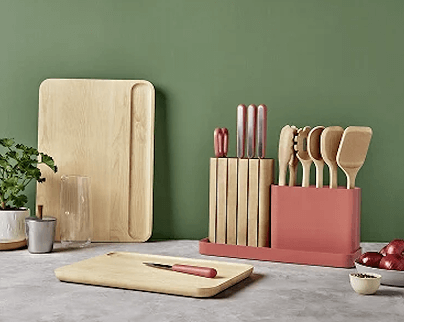
Heat-safe silicone is especially great for everyday cooking since it's flexible, easy to clean, and won't melt at normal stovetop temperatures. Our FSC-certified birch wood prepware is designed with ceramic cookware in mind.
These statements have not been evaluated by the Food and Drug Administration. This product is not intended to diagnose, treat, cure, or prevent any disease.
Not likely. A minor surface mark won't affect cooking performance. It's the accumulation of scratches over time that wears down the nonstick coating and causes food to stick.
With proper care—gentle utensils, low-to-medium heat, hand washing—ceramic pans can last for years. How often you cook and how you treat the surface are the biggest factors.
Light scratches on a high-quality ceramic pan made without PFAS, PTFE, or lead don't pose a safety concern. The coating itself is made from inorganic natural ingredients that remain safe even with minor wear.
Sources:
Are Ceramic Pots and Pans Safe to Cook With? | Food Network
Can You Use Metal Utensils on Ceramic Pans? | Lilly Teak
The Dos and Don'ts of Maintaining Ceramic Cookware | Made In
What Utensils Should Be Used with Ceramic Cookware? | Made In
Get started with the Caraway essentials!
Free Shipping On Orders $90+
Free Returns
30-Day Trial