Your Cart is Empty
Get started with the Caraway essentials!
Free Shipping On Orders $90+
Free Returns
30-Day Trial
Home & Kitchen with Caraway

Key Takeaways
People who cook at home regularly tend to consume fewer calories, less sugar, and more fruits and vegetables than those who eat out often.
Cooking at home gives you complete control over ingredients, portions, and quality, which adds up to real long-term wellness benefits.
Home cooking saves money, reduces food waste, and creates moments of connection that takeout simply can't replicate.
Cooking at home has gone in and out of fashion more times than skinny jeans. But the research is consistent on one thing: when you cook your own food, your life tends to get better in measurable ways.
We're talking about diet quality, mental well-being, finances, relationships, and the surprisingly satisfying feeling of pulling something out of the oven that you actually made yourself.
At Caraway , we've always believed that cooking should feel like something you want to do, not something you have to suffer through. The right tools make a real difference, which is why our Cookware Set is designed to make weeknight cooking less of a production.
Here are seven reasons cooking at home is genuinely worth the effort.
Research from Harvard Health shows that people who cook more meals at home consume fewer calories , less sugar, and less saturated fat than those who eat out frequently. A separate UK population study found that adults who ate home-cooked meals more than five times a week consumed nearly 100 grams more vegetables and 62 grams more fruit daily than those who ate fewer than three home-cooked meals per week.
You don't have to be on a meal plan or count anything. Just the act of cooking at home tends to shift your diet in a more nourishing direction.
Takeout, delivery apps, and restaurant meals add up fast. A family of four eating out three nights a week can easily spend several hundred dollars more per month than the same family cooking at home.
Research found that cooking at home is associated with better diet quality without adding to overall food costs. Even when you factor in the price of higher-quality ingredients, you're almost always coming out ahead financially.
When you cook at home, you decide what's in the meal. No surprise ingredients, no mystery oils, no excessive sodium added to make things taste better than they should.
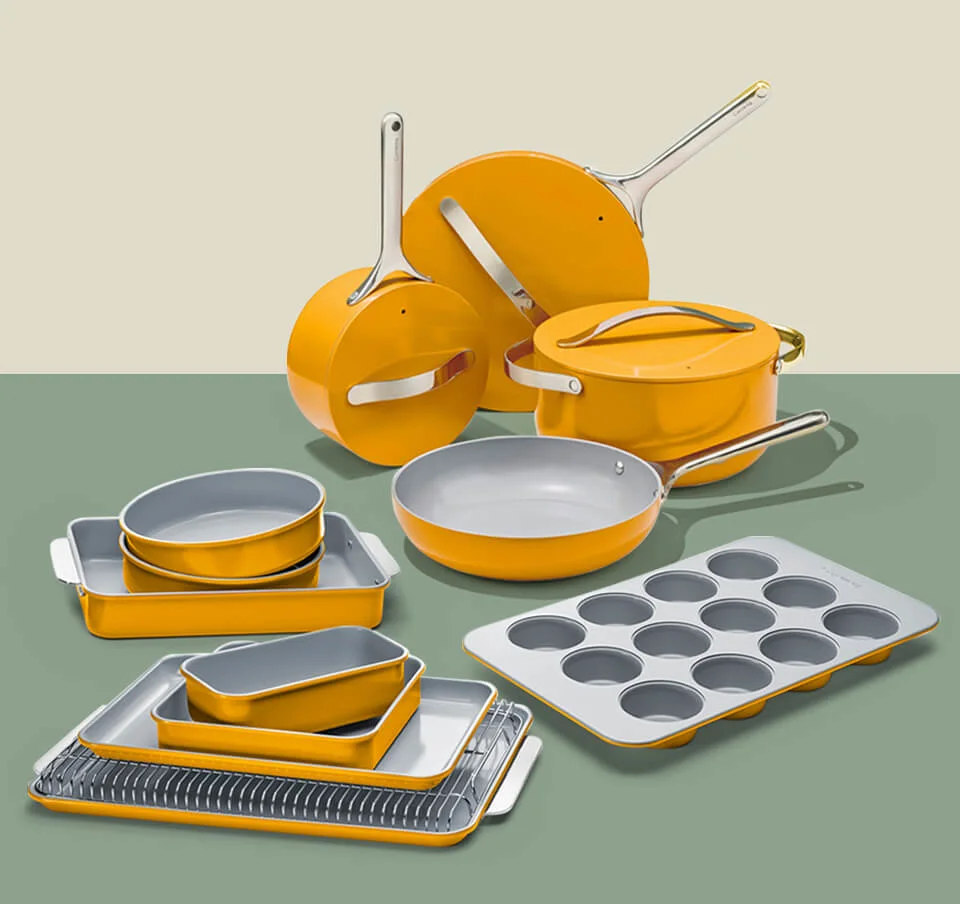
You also control the cookware your food comes into contact with. Choosing ceramic-coated cookware made without PFAS, PTFE, or PFOA is a small but meaningful upgrade. Our Bakeware Set and Cookware Set are both third-party tested for over 200 substances, so you know exactly what your food is being prepared on.
Cooking is a skill, and like every skill, it compounds. The more you do it, the better you get, and the more options open up to you.
Six months of regular cooking turns "I can make pasta" into "I can throw together a dinner from whatever's in the fridge." That kind of food confidence is incredibly freeing. You stop being dependent on apps, prepared meals, or whatever's nearby when you're hungry. You can just make something.
The average American household throws away roughly
a third of the food they buy . A huge chunk of that waste happens because people buy groceries with no real plan, then end up ordering takeout instead.
When you commit to cooking at home, you actually use what you buy. Leftover roasted vegetables become tomorrow's grain bowl. Cooked rice becomes fried rice. Wilting herbs go into pesto. A set of quality
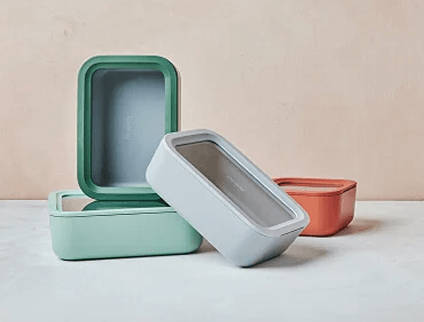
food storage containers makes this easier because you can actually see what you have and how long it's been there.
Family dinners aren't just a nice idea. They're
associated with better mental health outcomes for kids and adults alike.
Eating together regularly gives families time to talk, decompress, and check in with each other in a way that's hard to replicate. Cooking together adds another layer. Even if it's just one kid helping stir or set the table, you're building memories and habits that last well beyond the meal itself.
There's something quietly therapeutic about the rhythm of cooking, from chopping vegetables and stirring a pot to watching things transform from raw to finished.
Studies have explored cooking as a form of behavioral therapy , and many people describe it as a low-stakes way to slow down, focus, and create something tangible at the end of a stressful day. Add some music or a podcast, and it becomes the kind of routine you actually look forward to.
A few simple habits that make all the difference:
Start with three nights a week. Don't try to overhaul everything at once. Three home-cooked dinners are a meaningful change that's actually sustainable.
Keep your kitchen stocked. A pantry with rice, pasta, canned beans, tomatoes, and a few proteins in the freezer means you can always make something even when you haven't shopped.
Cook double on Sundays. A big batch of soup, chili, or roasted protein on Sunday becomes Monday's dinner and Tuesday's lunch with zero extra effort.
Make it enjoyable. Music, podcasts, a glass of wine, kids stirring something. Whatever makes cooking feel like part of your day, not a chore.
Invest in good tools. A solid fry pan, a Dutch oven, a quality baking sheet, and a sharp knife will carry you through almost any meal. Cheap tools make cooking harder than it needs to be.
Cooking at home isn't about perfection or hours in the kitchen. It's about regularly making something for yourself and the people you love, and noticing how much better that makes everything feel.
Better food, better budget, better moments around the table. None of it requires being a chef. It just requires showing up, getting started, and making it part of how you live.
Research suggests that cooking at home more than five times a week shows the most pronounced improvements in diet quality. Even three or four nights weekly makes a noticeable difference in both nutrition and finances.
Yes, in nearly every case. Even when you account for the cost of higher-quality ingredients, studies show home-cooked meals are consistently less expensive per serving than restaurant or delivery meals.
Start with simple recipes that have five or six ingredients and clear instructions. Sheet pan dinners, stir-fries, and pasta dishes are great places to begin. Most cooking skills are learned by doing, and the more you cook, the easier it gets.
Sources:
Home Cooking: Good for Your Health | Harvard Health
Frequency of Eating Home Cooked Meals and Potential Benefits for Diet and Health | PMC
Cooking at Home: A Strategy to Comply With U.S. Dietary Guidelines at No Extra Cost | PMC
Home Meal Preparation: A Powerful Medical Intervention | PMC
Get started with the Caraway essentials!
Free Shipping On Orders $90+
Free Returns
30-Day Trial